
Learn to Carry It
On the Creative Obituary, reflection as ritual, and the blessed, unending work of experimentation and iteration. Plus some great reads and good news.
The Creative Obituary is a reflective exercise that emerged from a period of profound grief, which is to say, deep love. We’ve experimented with it a few different ways and shared the exercise in classrooms and talks. Now we share it with you.
Nermin brought it to the table a few years ago, and we’ve been shaping it ever since. I asked her to tell us a bit about its origins, its benefits, its beauty. Come with us.
Tell us about the creative obituary—what is it? How did it come into existence?
A creative obituary is (despite the name) a life affirming reflective tool that invites us to turn the creative brief on its head, and think about the project’s end as the starting point.
It asks us to consider:
What was this project’s purpose? Why does it matter that it existed?
What change did it make?
Who and what did it care for?
Who cared for it? Who will carry on its work?
The idea for the creative obituary emerged from a deeply personal experience with grief. Shortly after co-founding Field of Practice, one of my closest friends, and a central pillar of my community, Mariam, passed away after living with cancer for years. She was effortlessly funny, deeply curious about everyone and everything, hater of Takalluf (Arabic & Urdu for unnecessary formalities), lover of the finer things and used books with a side of a good, crispy guava. So deeply empathic she'd melt your heart. She looked at her children, Yusuf and Hanaan, as though nothing else mattered. She knew what mattered most.
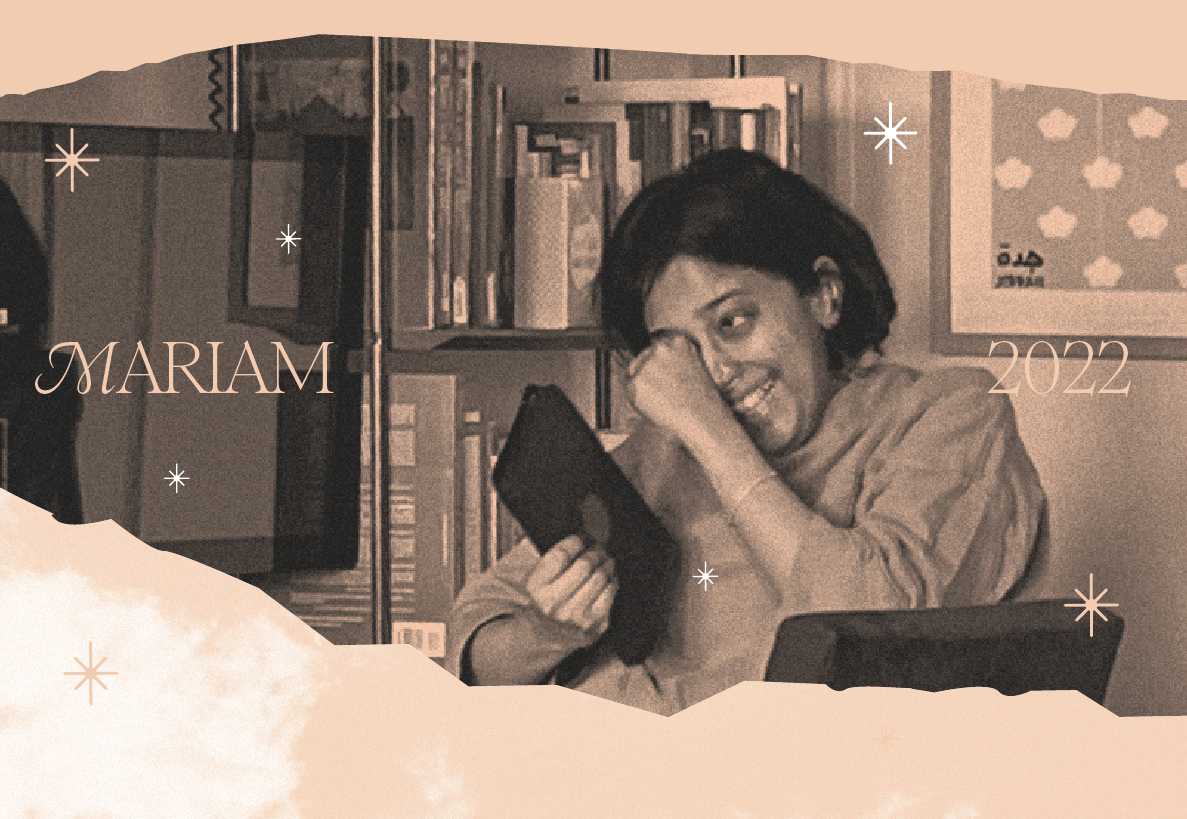
Mariam Sinai, 2022. Photo by Nermin Moufti
I had the profound honor of being one of Mariam's end-of-life caretakers, alongside her husband, family, and village. Witnessing a beloved through that transition reshapes how you see the world, and inevitably, how you create within it. One way or another, most of us come to understand that we don’t simply “move on” from grief. An idea that stayed with me during that time, from the book Option B:
We don’t move on from grief. We learn to move forward with it.
"People do not 'get over' a loss, but rather learn to carry it, live with it, and honor the remaining love."
ELISABETH KÜBLER-ROSS
The creative obituary was for me, a way to carry that love and pour it somewhere generative and life-giving. I first presented the framework at the 2022 Brand New Conference in Austin, sharing a trio of case studies that each ended with a creative obituary. It felt both cathartic and deeply resonant. I am so deeply grateful for every one who was generous enough to come hug me afterwards, and share their own stories. I have held that experience in my heart since.
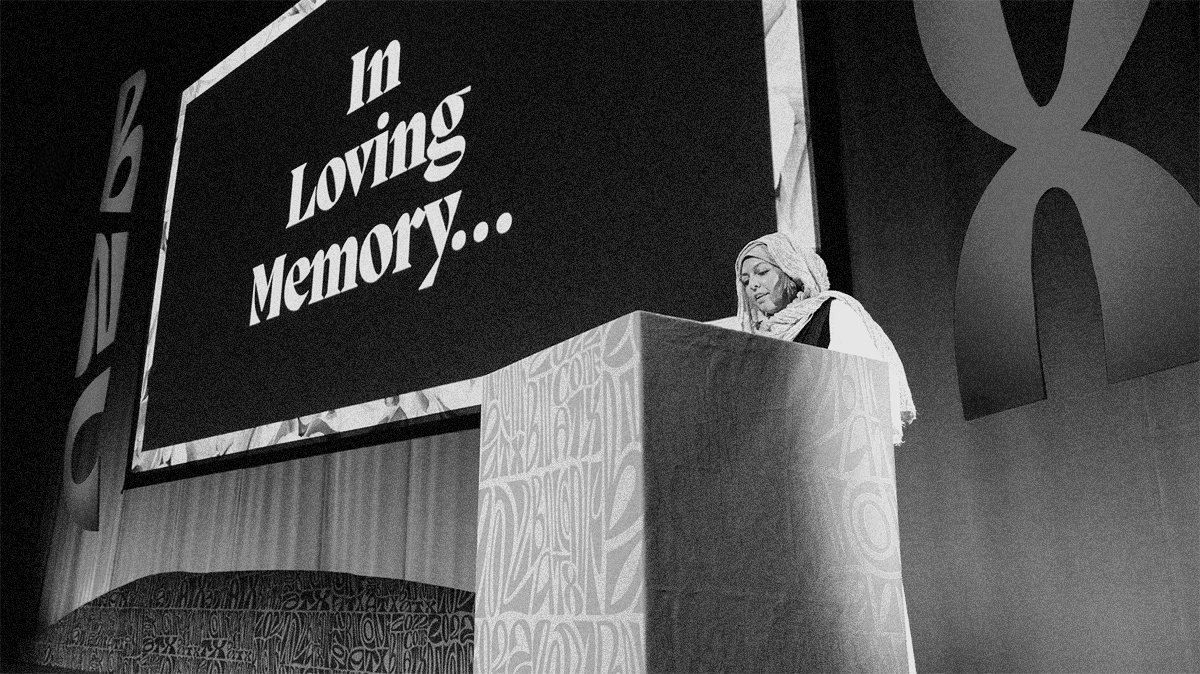
Brand New Conference, Austin. 2022. Photo by Justin Elledge
Who is it for? How might individuals/teams benefit from doing an exercise like this? How might it serve the creative process?
The creative obituary invites individual creatives and teams to dig deeper before designing. It’s helpful at the beginning of a branding project and can serve as a supportive companion to the Core Values exercise, which we use to help clients articulate the principles and beliefs that guide their business and creative decisions. It’s also helpful for organizations in the midst of transformation and transition to pause and reflect on the relationships and ways of working that will make the greatest impact.
It can be as useful to the student preparing to move from classroom to industry, as to seasoned creatives confronting new questions about their practice. For emerging designers, it can serve as a compass, helping distinguish between external expectations and sincerely held values. For our peers, it can be a tool for recalibration in moments of burnout, uncertainty, or growth. Sometimes, the biggest creative leaps happen when we recognize our definition of success has changed.
At its core, the creative obit is about clarity. In an industry often driven by urgency and output, it offers a rare moment to slow down and realign with intention, to ask ourselves how we want to live and work, in service of our purpose.
How has Field of Practice used the creative obituary? How has it evolved?
Kristin wrote a most tender creative obituary for us three years ago that still brings tears to my eyes. It's honest, aspirational, and sees us for our full, imperfect humanity:
Field of Practice was an intentionally small, joyfully experimental creative studio. It was collectively owned by capable, compassionate women, and others who shared their hunger for a beautiful, kind, imaginative and generous world.
They worked with start-ups, schools, cultural organizations, artists, organizers and futurists who understood pain as an opportunity for change, and who valued dignity, sustainability, and justice over endless scale and profit.
It offered those who built and nurtured it a chance to be their whole, messy, glorious selves, to continuously grow and evolve as people and practitioners, and to live a comfortable life, rich with time and space to pursue deeper connection with others, as well as their curiosities and passions.
They made a million friends and accomplices along the way. They took care of their village as best they could—their families noticed, and appreciated it. They were attentive and loving. They did too much to keep track of, maybe, but people remember how Field of Practice made them feel: important, creative and capable.
This exercise helped us shape a new business rubric, rooted in the same spirit of reflection and intentionality. It’s helped us get clear on the work we want to say yes to, and the kind of alignment we seek with our clients.
We recently piloted it as a project retrospective with our brilliant, generous friends at the Center for Reflective Intelligence. Their whole-hearted engagement with and feedback to it helped us refine it as an end-of-project survey:
What have we learned about ourselves as a result of this project?
What actions will we be able to take as a result of our work together?
How has this process informed who we want to be going forward?
What do we want to remember about this work?
This reframe helped us see more clearly how we can build communities of purpose through and beyond our work, and reminded us that reflection is relational. It is a constant practice, strengthened in conversation and collective care.
Like many good things, the creative obituary is a work-in-progress. Many versions of this exist! It’s less about perfecting a definitive framework than making space for curiosity. We’ll always look for new ways to expand on, resource, and weave these questions into the creative process.
How can reflection help us move forward with purpose, love, and care?

ON OUR SHELVES
We live in a world of abundant grief and endless beauty. We do what we can to keep our minds sharp and hearts open. Option B has numerous resources for grief, if that’s where you are this season. We also like Bad Bitches Have Bad Days Too, and this episode of On Being with Pauline Boss: Navigating Loss Without Closure. Kristin’s been revisiting her own favorite episodes of On Being as she prepares to mediate a conversation next month in Santa Fe with poet Emily Hyland to celebrate Hyland’s latest collection, My Wise Little Ghost. She’s been inhaling Jane Austen audiobooks on Libby while paging through Helen Macdonald’s H is for Hawk, a stirring meditation on grief and falconry. Nermin’s been living with Raising Calm Kids in a World of Worry: Tools to Ease Anxiety and Overwhelm, by Ashley Graber and Maria Evans, LMFTs and luxuriating in Rumi’s Water, translated from the Farsi by Haleh Liza Gafori. Maybe there’s something for you here.
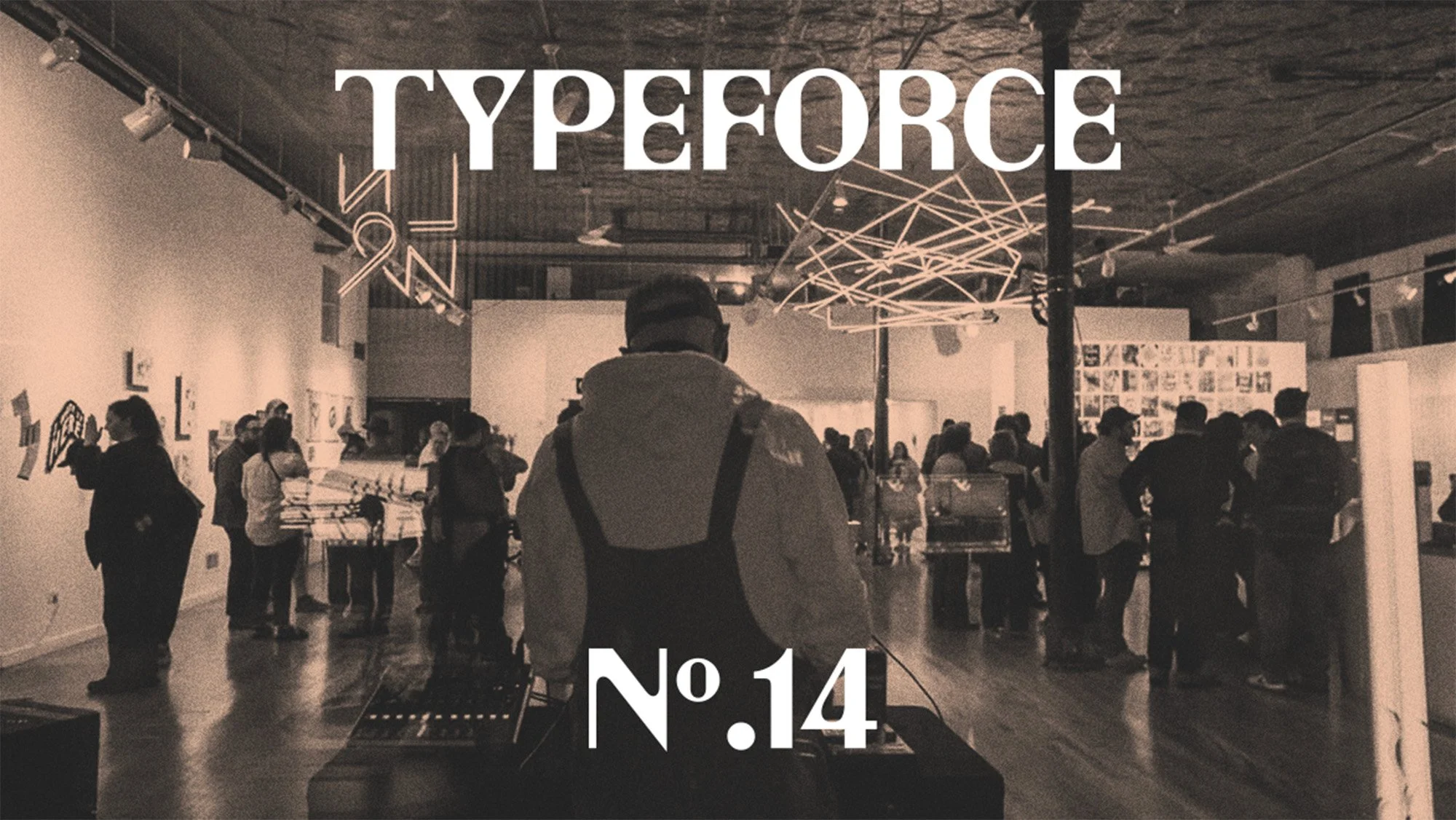
Typeforce 14, Co-prosperity, Chicago. Photo by Sandra Oviedo
SHIMMERS + SHOUTS
Typeforce 14 marked the annual art show’s first ever spring opening, and what a beautiful night it was, curated by co-chairs Nermin and Will Miller. If you missed opening night, the show remains on display at Co-Prosperity on Saturdays from 12-5pm, or by appointment, through May 29. Abundant gratitude to collaborators Bryant Smith, Lindsay McMenamin, and the whole Co-Pro team.
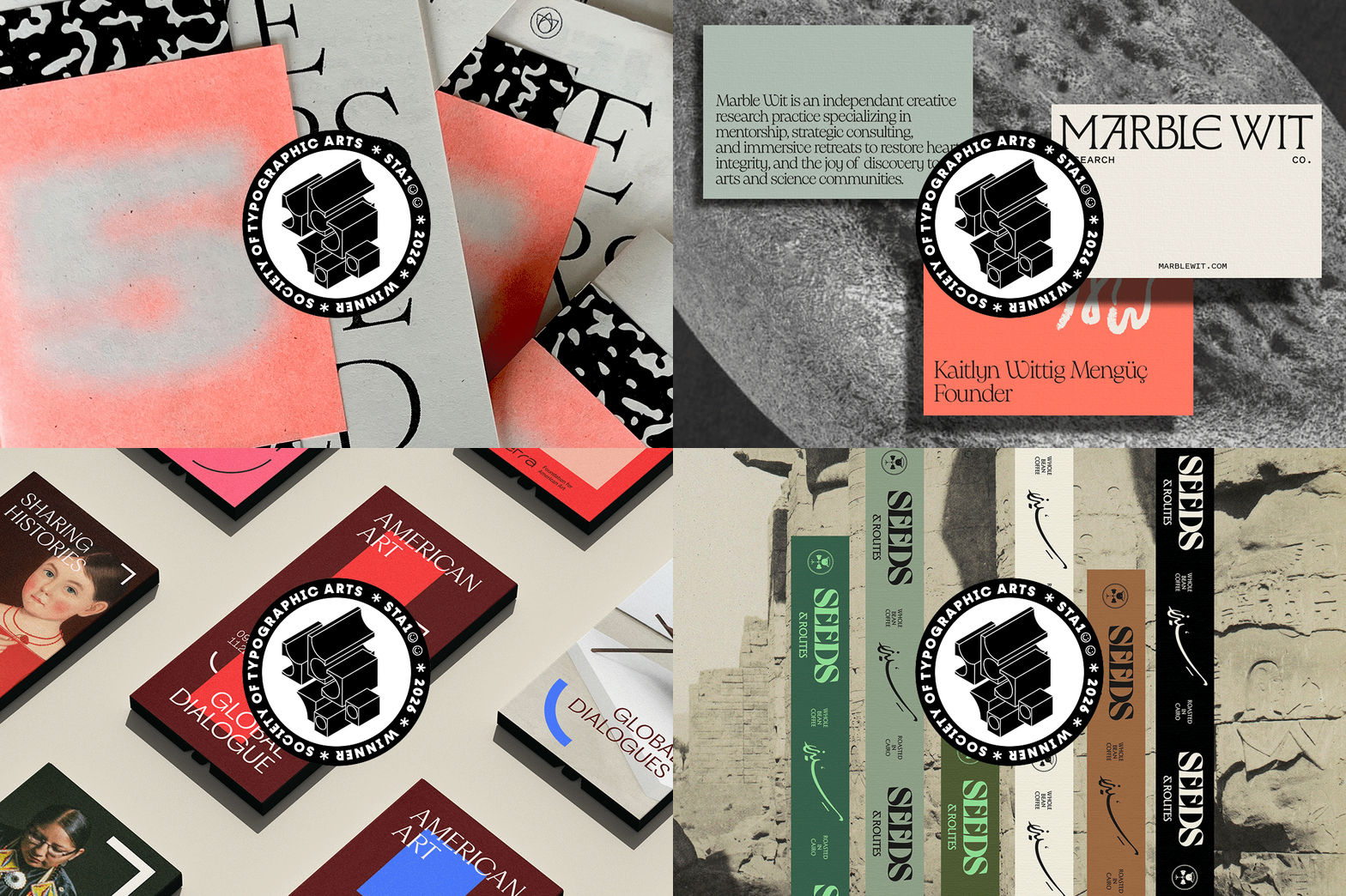
Speaking of typographic magic, Field of Practice took home four awards in the 2026 STA 100, honoring one hundred examples of typographic excellence from around the globe. Pretty thrilling stuff! Big love to our clients Terra Foundation for American Art, Marble Wit, and Seeds & Routes Coffee for the chance to make something beautiful together. Award #4 went to our zine, Five Years in the Field. Zines went out in the mail a few weeks ago to homes across the world, and we have a few more left. Let us know if you want one!
